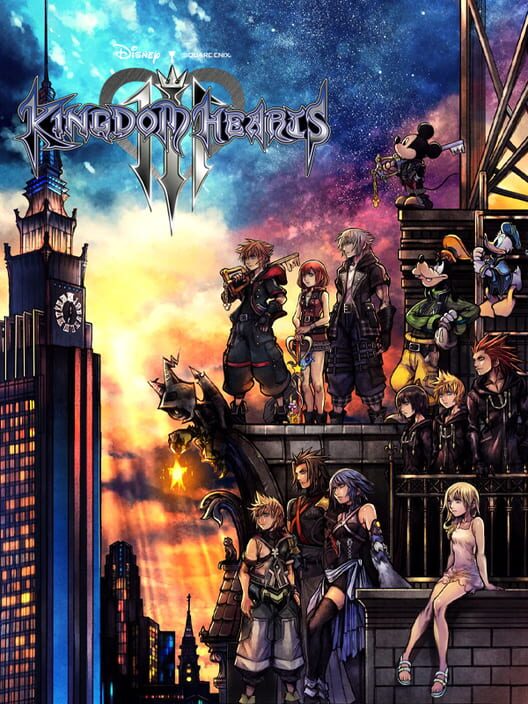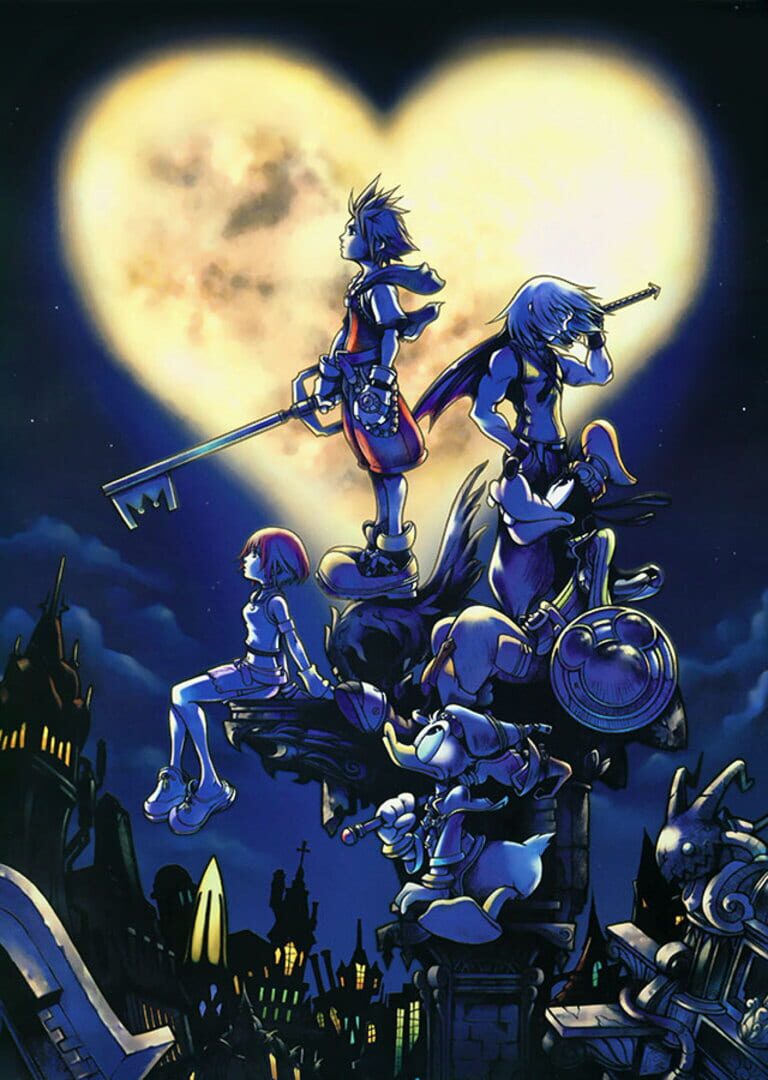
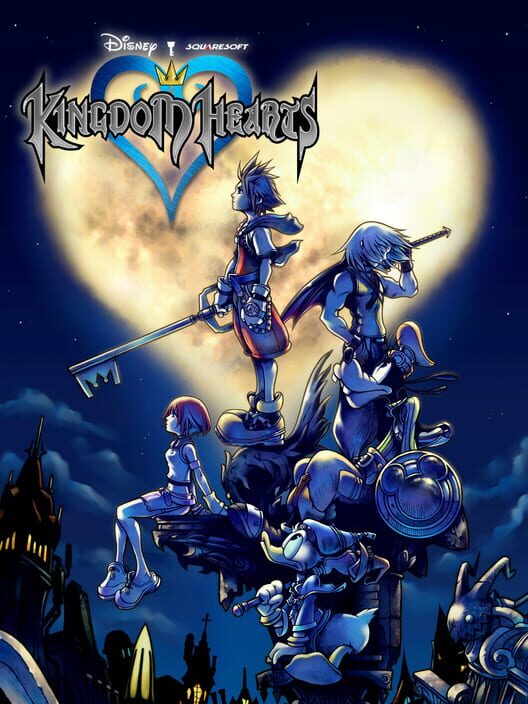
⋙ As soon as the game starts, Sora is already thinking about endings when they aren’t even plausible, let alone imaginable. “I’ve been having these weird thoughts lately… Like, is any of this real or not?". Whatever may come in the future doesn’t concern us in this piece.
⋙ It’s a bit strange to mention this again, since this is a script I wrote for a video about the first game one or two years ago, but I need to be clear: at some point, from a distance, I hated Kingdom Hearts. The magical lands that spring from Mickey Mouse’s gloved hand were kryptonite to my then-naive, cynical ideals. After all, it’s an inescapable giant. “Para leer al Pato Donald” (“How to Read Donald Duck”) is one of my formative lessons in media consumption and social awareness—whether through agency-driven creators or poorly handled word of mouth, especially around mainstream content. Borderline-paranoid Marxism is a good description, but I don’t feel that book was wrong.
I went through that whole phase in my adolescence, certainly rooted in contrarianism—a rejection of the Land of Imagination fashioned by Walt Disney: whether it was the Judeo-Christian iconography of Narnia, unsettling mysteries about the company’s old films, the whole princess-and-feminine-nobility thing, the musicals… I hated it. Of course, when you eventually understand things, you become more humble.
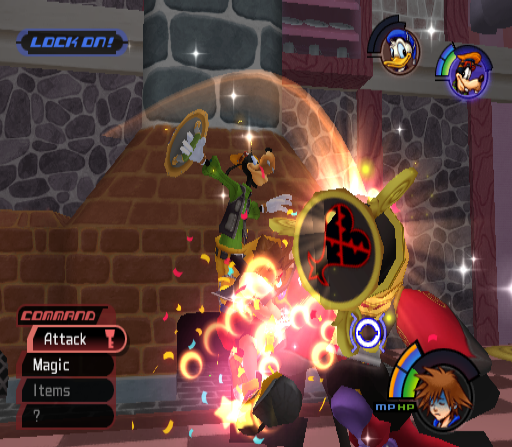
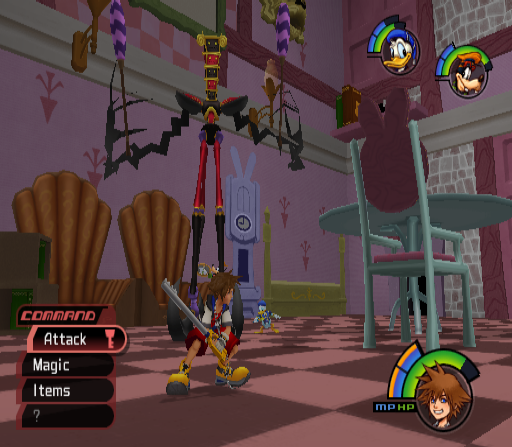
⋙ Kingdom Hearts begins in the most pasteurized setting of its era—at a time when maybe it wasn’t so much so: a paradisiacal beach. Very quickly it teaches us the keys of this ARPG: beating up bad guys, automatic leveling, kinesthetic skill instead of shameless grinding—controlling chaos in a hack-and-slash where Sora expresses himself through the Keyblade. In the long run, it’s a role-playing spectacle. The player’s options rise in parallel with Sora himself, as he learns to bear the weight of his eccentric bludgeoning staff. It actually takes time to become one with the sword in a fully functional sense, which discourages many people due to the limited nature of his moveset—especially fans of the genre it belongs to.
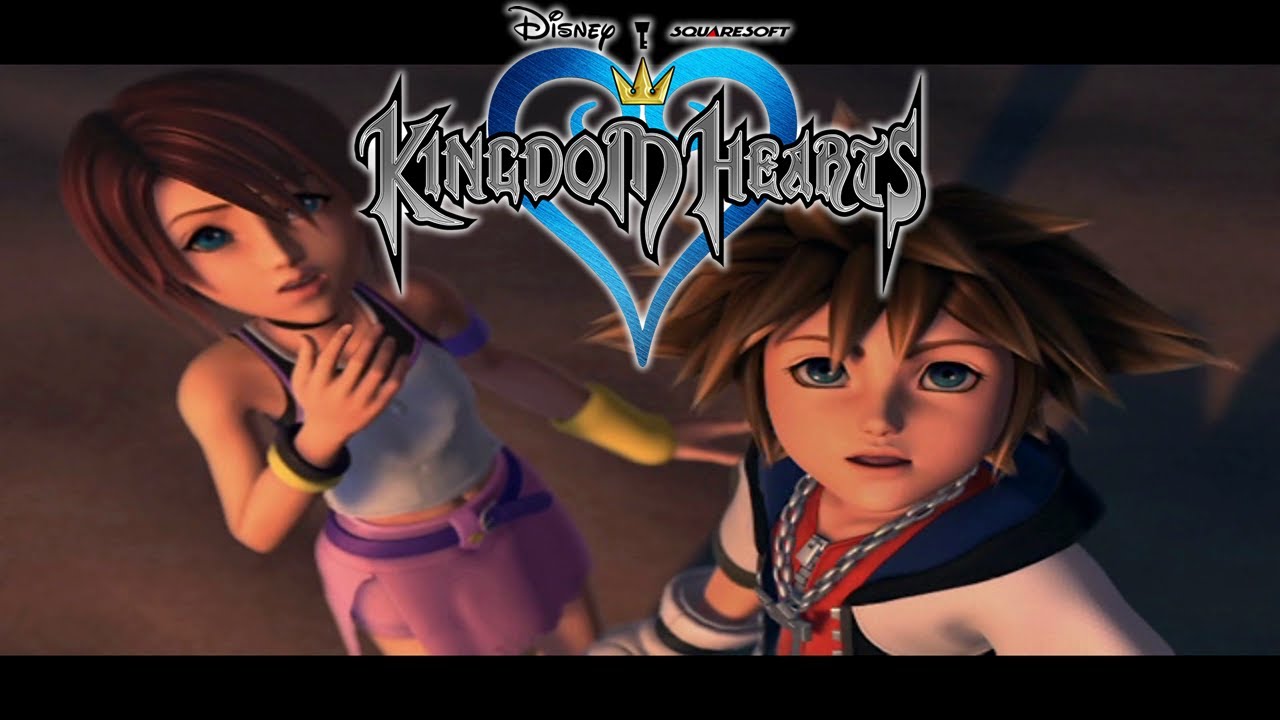
⋙ Sora, Kairi, and Riku are the ones who truly command all the attention, even when it doesn’t seem that way—the semi-romantic triangle that will permeate the entire saga. Their relationship sits somewhere between cheerful and mildly toxic, without clearly distinguishing when something is a serious shove or playful annoyance—that apathy, the unpredictable attitude of pubescent kids. Which is how most childhood relationships are handled when there’s a girl around—at least in my life, experience, and observation of others with better social skills than mine. What can I say, I took part in it too.
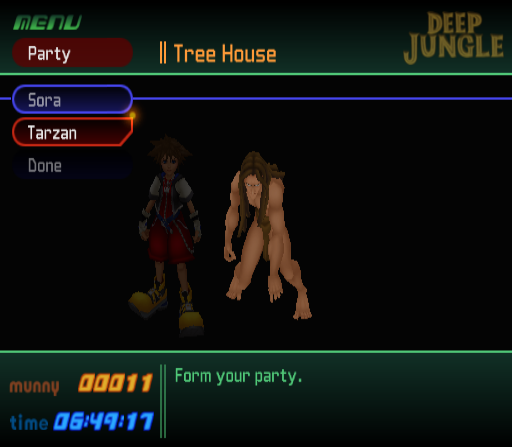
⋙ The classic Disney characters occupy clearly defined roles you don’t even need to actively look for: just seeing their designs and behavior is enough. This works wonderfully for Kingdom Hearts’ ultimate strength: pure, crunchy fan fiction. That’s what it is on a surface level, something that offends the more traditionalist circles of writing and reading, and that continues to burn like the fire of a spirit dyed blue—in the end, it’s one of the few absolutely honest creative avenues.
⋙ Even though it seems to do its best to keep its chin up, Kingdom Hearts carries a melancholic flavor as it moves forward, for all its slapstick and idiocy. As our protagonists are separated, their destinies tangle, their subtle personal voids widen, their weaknesses grow stark. The triangle then tries to close—and the deep connection between Sora and Kairi drives one of the most emotionally charged moments on a purely videogame level: us turning into heartless ants, only to rise from the depths.
⋙ What is a heart? Beats, terror, fear, hope and despair, memories, connections. What felt special to me about Kingdom Hearts lies in the vividness of its story. It remains simple and audiovisual enough not to need further explanations of motivations, staying in my mind thanks to transcendent elements. I understood Ansem’s stoic manipulation and mysticism without understanding anything about his research, and I don’t feel like I need to. Kairi’s past adds a cosmic palette that serves well enough to reinforce the themes. Even Donald’s fears about meddling in other worlds seem to dissolve once we understand that everyone will return to their place when the portals close.
The Light of the Heart seems to be… love. Lost in translation through all the darkness that silences our voice.
⋙ Kingdom Hearts is a game about change, honest with itself. Not only about wanting to leave “kid stuff” behind and reach the true meat of life—a trap that’s all too easy to fall into. Spreading our wings and leaving our distant islands behind feels like the primordial dream: to finally be free and discover what lies out there. It’s also about leaving things behind without forgetting them, or else hearts may be lost. It’s about growing up, and swallowing the bitterness that comes with it.
Like many of the best things in life.
YELLOW
AESTHETICS â•â•â• // INTEGRITY â•â•â• // DENSITY â•