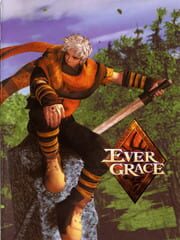
⋙ It will never stop feeling strange for me to talk about Evergrace.
The reason is that this early PlayStation 2 title from FromSoftware is, besides being a somewhat lost game, also something that only truly appears under the right circumstances. The moment in which it cut deep was meant for a version of myself that no longer exists; it’s not that I’ve stopped falling, spiraling, or despairing, but I am genuinely no longer the same person I was at that point in time.
Because of that, it’s funny to think that the last time I tried to replay it was a swing of new sensations that simply didn’t fit my first attempt at appreciating it—let alone the second, where I actually managed to do so.
⋙ Yes, at the time I trashed Evergrace without mercy. A massive disappointment in the face of expectations that were never met. My view of its creators and their business side was far more limited than it is now, or at least I like to think so. Still, I can’t really be judged too harshly for it. I mean, who would be foolish enough to believe this is a good game, even when revisiting it years later?
Well… sometimes you just have to trust the burn in your stomach.
⋙ Evergrace is intensely imperfect from many angles. Right off the bat, it’s a strange game: an action RPG with a Zelda-like flavor that lacks a lock-on button, turning what could be acceptable into something both clumsy and technical at the same time. It looks outdated, revolutionary, and static all at once.
At the same time, its stat-driven, deterministic inventory shines, where a pumpkin headpiece has its own specific parameters and levels, distinct from a soldier’s helmet. Yes, your equipment defines your stats and available spells, and it’s even required to solve certain “puzzles.” In between all that lies a difficulty curve that swings from standard to outright entertainment suicide.
Many of its spaces are unnecessarily vast; others reveal a simple, autumnal beauty, always evoking a sense of loneliness that feels more accidental than intentional. The music doesn’t help either: Kota Hoshino leans hard into avant-garde territory, with ethnic, soul-stirring selections that, as I once read, were partially based on ’90s pop songs.
⋙ The result is an experience that leaves no one indifferent, yet almost no one would actually want to play. There are enemies that take ages to spawn, items that drop out of reach, levels designed to drive you up the wall, slowness, boredom, frustration.
And yet, there’s something there…
⋙ The story of Evergrace’s world revolves around the Crest, a cursed mark tied to the balance between humanity and nature. Fallen empires, human experimentation, Viliana trees that cleanse the land, inevitable cycles. It isn’t a curse in the simple sense—it’s balance. A dark, confusing ecological and existential allegory that connects with turn-of-the-millennium anxieties about the future and growing environmental awareness. None of this is obvious: it’s hard to grasp without outside help, and I think that’s exactly what FromSoftware wanted.
The drama of Siena, Trandin, Darius, and Sharmine culminates in a sober, nihilistic, and melancholic ending where the cycle continues. Not every question is answered—just as the game itself refuses to answer your demands.
And maybe that doesn’t matter.
It isn’t epic, it isn’t polished, it isn’t a masterpiece. It’s a failed experiment.
⋙ The only thing I’m certain of is that something like Evergrace is unlikely to ever exist again, not even in its sequel. And that terrifies me.
⋙ …Well, it’s a piece of shit.
And I adore it for that. I think. A little.
At some point someone told me a very simple phrase, and I’m condensing it even further now, but it went something like this:
It’s very easy to be a fan of the things everyone loves.
⋙ Who loves Evergrace?
SPRING GREEN
(AESTHETIC ⭕ // INTEGRITY ⭕⭕⭕ // DENSITY ⭕⭕)