2019
⋙ For a long time, a strange mirage.
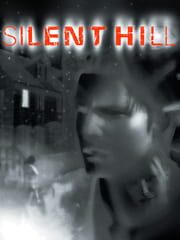
I hadn’t had the chance to delve any deeper than a peripheral playthrough of Silent Hill circa 2011—a jumble of spectral, abominable images with little substance. There’s no sharpness in those memories, and I had come to believe what everyone usually says about the pioneer: the sequels did things better. When, in truth, the foundations were already here, hidden.
⋙ I should add—echoing several other English-speaking Backloggd reviewers—that the game does a very good job of darkening its strongest symbolism within a plot notably derivative of the Satanic Panic of the 1990s, embodied in a religiously ambiguous cult with the most typical goal imaginable: to raise an otherworldly being among us so we may be freed from our infamous suffering; ergo, cheap occult chatter. Whether it mocks this or elevates it as a counterpoint wasn’t entirely clear to me.
⋙ Beneath a rural façade of what today reads as desolate, slightly analog horror lie the true foundations of its proposal: Jacob’s Ladder. The child of Mikami’s deliriums and company doesn’t merely borrow Adrian Lyne’s audiovisual itinerary; it also escapes his fraudulent narrative direction. The key element—the inability to know what is real or which moment can be taken as relevant until, by piecing certain things together, we reach a genuinely convincing answer that avoids the most ridiculous explanations. During moments when Dahlia, or Cybil, or Lisa paraphrased demonic tongue-twisters or went off on their tangents, I couldn’t help thinking of Jacob’s dialogue about virulent American warfare.
⋙ In the end, the silent mountain is just that: an open secret to be overcome, wandering through its intoxicating fog and its unsettlingly realistic streets rendered by the herculean power of a PlayStation. That secret is what we are free to interpret, but the pieces are hidden beneath all that confused, trope-laden narrative.
For me, it is (was) the plaintive yet still uncertain journey of a Harry Mason doing what he can to cope with the death (or abandonment) of his loved ones—specifically his daughter, Cheryl—perhaps through her, and also through the eyes of this corrupted hero’s journey. He gathers in his mind this personal hell from which the franchise will continue to drink, characters both significant along the way and purely fictitious, used to give a logical explanation to the idea that someone we love can disappear from our lives. An explanation Harry wants to convince himself of.
Religion is a constant—perhaps even more important than Cheryl—surviving through the symbols and amulets we collect to solve puzzles, the references to demons and sectarian circles. Right before our eyes, we search for every thought that stains our pain with Faith. Even if we need to concoct explanations and wild digressions just to be content with the idea that this person is gone.
And so, from the most tormented minds are born the true demons—even from those who want to help us avoid a tragedy.
⋙ Of course, this is where the domestic horrors already explored in Resident Evil and its ilk take root, but from a new perspective: instead of an enemy stripped of its humanity, we now face a construct emanating from humanity itself and its everyday life. Dogs, birds, doctors with tumors, and censored, cadaverous, dismembered children’s bodies. Schools, hospitals, living rooms. One’s own home and one’s place of work or leisure. It even takes the opportunity to stomp briefly on a police station that’s little more than decoration.
Every place makes room for unceasing mourning. And, almost handcuffed to it, the birth of the worst noxious thoughts—like reviving that special person through black magic. Who hasn’t had an intrusive, even laughable idea like that in moments of shared and personal suffering? The easiest way to escape reality is to cling to what isn’t real. It sounds incredibly obvious, but in those moments we think with our hearts.
Or at least that’s where I landed.
2022
⋙ And I quote myself:
It will take (it took) time for us to truly know what we are fighting against and to understand that this nightmare does not belong to us, but to another person: Alessa Gillespie.
What happens when institutions fail you from the very day you are born? When everything around you feels like embracing a crown of thorns. When neither the church, nor the authorities, nor governments serve your needs?
⋙ The nightmare that governs us actually belongs to Alessa: a torrential escape of her own traumas and suffering, necessary to carry out the ritual that would bring paradise—the key to the future. A suffering that mirrors and twists the idea of the martyr who dies for all of us, the vessel of eternal pain so as never to feel it again. Alessa was born a witch and could never truly die. Kept by force in our world, abused by those who educated her; by those who treated her wounds; by those who taught her her path in life. She was the perfect candidate for the cult’s great Ascension.
⋙ God would develop in her womb, able to exist as a machination and forgive our sins. Silent Hill is about labor pains; the lack of freedom under those who assign a destiny to you in advance. Not even Harry, as a {father}, escapes being part of the yoke. There is a key moment in this first title that encapsulates all these themes of religious subjugation and the female parasite: Cybil and the parasite we annihilate (or not) with aglaophotis.
⋙ In the end, we cling to Silent Hill 1 more for the inherently nostalgic vibes of its deserted streets than for its narrative prowess. Which is curious, if we consider how surprisingly ignored its feminine semblance is. And it’s not that the feeling is wrong—I mean, it’s even uncomfortable to see how much this little town resembles any random London street at three in the morning.
GREY
(AESTHETIC ⭕⭕ // INTEGRITY⭕⭕ // DENSITY ⭕⭕)