RAMZU

Member since January 2026
Chile
Rating Explanation:
Stars represent enjoyment and/or impact.
The color system is based on SPECTREVIEW: an RGB spectrum where the final color describes a game’s character.

RED – Aesthetics: beauty in a philosophical sense. Low red can mean ugliness or discomfort; high red implies beauty or strong emotional impact.

GREEN – Integrity: awe at the game’s construction or message—originality, authenticity, sincerity. Low green may indicate a game that plays it safe within its subgenre, doing only the minimum.

BLUE – Density: how hard it is to get into. This includes complexity, difficulty, barriers of entry, abstraction, confusion, or friction between game and player.

This system doesn’t judge “overall quality” in a moral good/bad sense, but highlights defining traits. A pure PEARL game isn’t inherently better than a pure OBSIDIAN one.
Also, this is all mostly nonsense—I just thought it was fun.
RAMZU
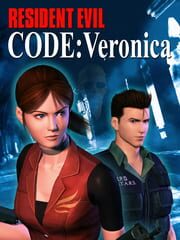
Resident Evil Code: Veronica
Dreamcast

⋙ “Talking about the things you’re passionate about” is a phrase that’s treated as obligatorily positive, when in truth you can be fond of something while simultaneously recognizing your disdain for it. On its most immediate level, one could say that pelambre—talking shit about others—exists in this same space, even though it obviously doesn’t carry the same value or moral weight. I’m starting this way because I think I’ve already buttered you up a bit with things I genuinely appreciate.

That said, I think I can honestly consider myself a no-filter fan of Resident Evil, especially of the classic formula. But instead of writing about my favorite entries, or going in chronological order, I decided to cut things off at the—well—“healthy” point. To immediately define my limits.

I hate Resident Evil: Code Veronica with a passion, in all its versions.

⋙ So we’ll do things differently. I’ll give you a carefully worked list of good things first.

✚ The opening of this game is fantastic, and I genuinely believe that on a conceptual and purely visual level, the spaces it inhabits are generally well executed—lugubrious, cold, and even beautiful from a Y2K perspective. Little by little I’ve let go of the friction I used to have against pre-rendered graphics in a classic RE.

✚ Along the same lines, I’ve really warmed up to its mid-2000s anime-style designs, somewhere between The Sims 2 and a French/Canadian TV series. Claire best girl.

✚ Fully introducing the zombie in small but dangerous quantities is also a great call; beyond their depressingly dead design, in this title the undead are particularly annoying, and making the player understand that quickly is a smart move.

✚ Where I really give Code: Veronica some love is in the visual, mechanical, and narrative connection it establishes to cement Umbrella as a dynasty with sacred airs—something RE Survivor had already worked on and RE:0 would later develop a bit further. The Ashfords, Alexia and Alfred, the entire game it plays with genetic obsession, inheritance, and iconoclasm, all reflected in the gothic spaces it presents. Victorian imagery, castles, dolls, carousels—signaling a loss of innocence in the face of domestic horror.

✚ I genuinely appreciate sex appeal when it’s this honest, and we should never forget—something I did for a long time—that Resident Evil has always been anime bullshit. Alexia as hypersexualized body horror—monstrous, horny, oppressive—is a direct connection to the problematic themes Code Veronica touches on: the price of incest. Even if it stumbles into some degenerative and offensive gender commentary along the way.

And…

…That’s it.

Now the rest.

✘ Code Veronica is sloooooooooow. Like, unbelievably slow to really open up—not just the expected and necessary backtracking of a full-blooded survival horror. Oh no, it genuinely wants to waste your time. Before that, you have to run laps around the same area over and over, only for it to later open into three different locations you must juggle in terms of route and inventory—an absolute exaggeration of the values people appreciate in earlier and later entries. Yes, yes, you can have too much of a good thing, and this is a poster-child case. This also means it’s a long game, so…

✘ The infamous instances of soft-locking, unavoidable deaths, or situations that require extreme precision and inventory dumping stand out even more. As if it weren’t enough that the game is demanding with what it gives you, it pulls these cracked knowledge-and-skill checkmates—and to top it all off, it does so after grueling minutes of constant play. That Chris “switcheroo” is… it’s diabolical.

✘ Code Veronica has a sort of rock-paper-scissors combat system. Bandersnatches—one of the worst enemies I’ve had the sadness of meeting in my life—are weaker to explosive bolts, others seem to have other weaknesses, etc. Which is, again, a constant test of premeditation that doesn’t come close to this level in any other title, except maybe RE Gaiden. This is made worse by enemy respawning.

✘ While the knife is the most effective it’s ever been in the franchise, the enemy roster is more unpredictable than before—even in speedruns I’ve watched, Bandersnatches are the enemy that determines run time, and every attempt I see contradicts the previous one. Sometimes the grab doesn’t connect, sometimes you kill it in ten knife hits, sometimes it tags you, drops you into red health, and takes twenty knife hits. A fucking mess.

✘ Playing on Easy Mode (exclusive to specific Japanese versions, God knows why) didn’t make it any better: the onion-layer progression design became even more obvious, ammo scarcity turned into inventory-space scarcity for literally everything else, enemies die ridiculously fast so you end up shooting into the air just to waste bullets and manage your slots properly… It becomes a competition against your own patience, moving items between boxes and metal detectors.

✘ After FOUR ATTEMPTS at replaying it in an optimized way after my first run, it’s only natural that I ended up hating it.

✘ The Chris–Wesker relationship is where things really kick into high gear here. And well… that’s that. It’s never been something that motivates me much about Resident Evil, so I guess it exists.

✘ As if it weren’t enough that Steve is by far the worst character in the game, it’s established from the get-go that he’ll be Claire Redfield’s romantic interest… to this day, I suppose. What a way to reduce Claire to a piece of meat. Blergh.

✘ Alexander Ashford remains part of the “latent danger” representation of sexual dissidence established by films like The Silence of the Lambs, which I can’t ignore.

✘ Did I mention that I hate Bandersnatches?

Fucking awful game. It’s so interesting.

In a way, it’s the obvious de-evolution of the franchise at that moment—choosing to bend the player over backward in opposition to the simplicity of its predecessors, something done deliberately and without mercy—and that, at least, is worthy of respect.

CYAN

AESTHETICS ⭕ // INTEGRITY ⭕⭕⭕ // DENSITY ⭕⭕⭕

RAMZU
RAMZU
started following dpashutskii
RAMZU
started following searchtoplay
RAMZU
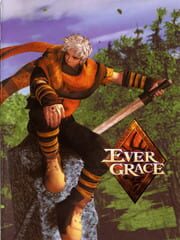
Evergrace
reviewed Evergrace
PlayStation 2

⋙ It will never stop feeling strange for me to talk about Evergrace.

The reason is that this early PlayStation 2 title from FromSoftware is, besides being a somewhat lost game, also something that only truly appears under the right circumstances. The moment in which it cut deep was meant for a version of myself that no longer exists; it’s not that I’ve stopped falling, spiraling, or despairing, but I am genuinely no longer the same person I was at that point in time.

Because of that, it’s funny to think that the last time I tried to replay it was a swing of new sensations that simply didn’t fit my first attempt at appreciating it—let alone the second, where I actually managed to do so.

⋙ Yes, at the time I trashed Evergrace without mercy. A massive disappointment in the face of expectations that were never met. My view of its creators and their business side was far more limited than it is now, or at least I like to think so. Still, I can’t really be judged too harshly for it. I mean, who would be foolish enough to believe this is a good game, even when revisiting it years later?

Well… sometimes you just have to trust the burn in your stomach.

⋙ Evergrace is intensely imperfect from many angles. Right off the bat, it’s a strange game: an action RPG with a Zelda-like flavor that lacks a lock-on button, turning what could be acceptable into something both clumsy and technical at the same time. It looks outdated, revolutionary, and static all at once.

At the same time, its stat-driven, deterministic inventory shines, where a pumpkin headpiece has its own specific parameters and levels, distinct from a soldier’s helmet. Yes, your equipment defines your stats and available spells, and it’s even required to solve certain “puzzles.” In between all that lies a difficulty curve that swings from standard to outright entertainment suicide.

Many of its spaces are unnecessarily vast; others reveal a simple, autumnal beauty, always evoking a sense of loneliness that feels more accidental than intentional. The music doesn’t help either: Kota Hoshino leans hard into avant-garde territory, with ethnic, soul-stirring selections that, as I once read, were partially based on ’90s pop songs.

⋙ The result is an experience that leaves no one indifferent, yet almost no one would actually want to play. There are enemies that take ages to spawn, items that drop out of reach, levels designed to drive you up the wall, slowness, boredom, frustration.

And yet, there’s something there…

⋙ The story of Evergrace’s world revolves around the Crest, a cursed mark tied to the balance between humanity and nature. Fallen empires, human experimentation, Viliana trees that cleanse the land, inevitable cycles. It isn’t a curse in the simple sense—it’s balance. A dark, confusing ecological and existential allegory that connects with turn-of-the-millennium anxieties about the future and growing environmental awareness. None of this is obvious: it’s hard to grasp without outside help, and I think that’s exactly what FromSoftware wanted.

The drama of Siena, Trandin, Darius, and Sharmine culminates in a sober, nihilistic, and melancholic ending where the cycle continues. Not every question is answered—just as the game itself refuses to answer your demands.

And maybe that doesn’t matter.

It isn’t epic, it isn’t polished, it isn’t a masterpiece. It’s a failed experiment.

⋙ The only thing I’m certain of is that something like Evergrace is unlikely to ever exist again, not even in its sequel. And that terrifies me.

⋙ …Well, it’s a piece of shit.

And I adore it for that. I think. A little.

At some point someone told me a very simple phrase, and I’m condensing it even further now, but it went something like this:

It’s very easy to be a fan of the things everyone loves.

⋙ Who loves Evergrace?

SPRING GREEN

(AESTHETIC ⭕ // INTEGRITY ⭕⭕⭕ // DENSITY ⭕⭕)

RAMZU
Evergrace
completed Evergrace
RAMZU
Castlevania
completed Castlevania
RAMZU
Silent Hill
completed Silent Hill
RAMZU
Silent Hill
reviewed Silent Hill
PlayStation

2019

⋙ For a long time, a strange mirage.

I hadn’t had the chance to delve any deeper than a peripheral playthrough of Silent Hill circa 2011—a jumble of spectral, abominable images with little substance. There’s no sharpness in those memories, and I had come to believe what everyone usually says about the pioneer: the sequels did things better. When, in truth, the foundations were already here, hidden.

⋙ I should add—echoing several other English-speaking Backloggd reviewers—that the game does a very good job of darkening its strongest symbolism within a plot notably derivative of the Satanic Panic of the 1990s, embodied in a religiously ambiguous cult with the most typical goal imaginable: to raise an otherworldly being among us so we may be freed from our infamous suffering; ergo, cheap occult chatter. Whether it mocks this or elevates it as a counterpoint wasn’t entirely clear to me.

⋙ Beneath a rural façade of what today reads as desolate, slightly analog horror lie the true foundations of its proposal: Jacob’s Ladder. The child of Mikami’s deliriums and company doesn’t merely borrow Adrian Lyne’s audiovisual itinerary; it also escapes his fraudulent narrative direction. The key element—the inability to know what is real or which moment can be taken as relevant until, by piecing certain things together, we reach a genuinely convincing answer that avoids the most ridiculous explanations. During moments when Dahlia, or Cybil, or Lisa paraphrased demonic tongue-twisters or went off on their tangents, I couldn’t help thinking of Jacob’s dialogue about virulent American warfare.

⋙ In the end, the silent mountain is just that: an open secret to be overcome, wandering through its intoxicating fog and its unsettlingly realistic streets rendered by the herculean power of a PlayStation. That secret is what we are free to interpret, but the pieces are hidden beneath all that confused, trope-laden narrative.

For me, it is (was) the plaintive yet still uncertain journey of a Harry Mason doing what he can to cope with the death (or abandonment) of his loved ones—specifically his daughter, Cheryl—perhaps through her, and also through the eyes of this corrupted hero’s journey. He gathers in his mind this personal hell from which the franchise will continue to drink, characters both significant along the way and purely fictitious, used to give a logical explanation to the idea that someone we love can disappear from our lives. An explanation Harry wants to convince himself of.

Religion is a constant—perhaps even more important than Cheryl—surviving through the symbols and amulets we collect to solve puzzles, the references to demons and sectarian circles. Right before our eyes, we search for every thought that stains our pain with Faith. Even if we need to concoct explanations and wild digressions just to be content with the idea that this person is gone.

And so, from the most tormented minds are born the true demons—even from those who want to help us avoid a tragedy.

⋙ Of course, this is where the domestic horrors already explored in Resident Evil and its ilk take root, but from a new perspective: instead of an enemy stripped of its humanity, we now face a construct emanating from humanity itself and its everyday life. Dogs, birds, doctors with tumors, and censored, cadaverous, dismembered children’s bodies. Schools, hospitals, living rooms. One’s own home and one’s place of work or leisure. It even takes the opportunity to stomp briefly on a police station that’s little more than decoration.

Every place makes room for unceasing mourning. And, almost handcuffed to it, the birth of the worst noxious thoughts—like reviving that special person through black magic. Who hasn’t had an intrusive, even laughable idea like that in moments of shared and personal suffering? The easiest way to escape reality is to cling to what isn’t real. It sounds incredibly obvious, but in those moments we think with our hearts.

Or at least that’s where I landed.

2022

⋙ And I quote myself:

It will take (it took) time for us to truly know what we are fighting against and to understand that this nightmare does not belong to us, but to another person: Alessa Gillespie.

What happens when institutions fail you from the very day you are born? When everything around you feels like embracing a crown of thorns. When neither the church, nor the authorities, nor governments serve your needs?

⋙ The nightmare that governs us actually belongs to Alessa: a torrential escape of her own traumas and suffering, necessary to carry out the ritual that would bring paradise—the key to the future. A suffering that mirrors and twists the idea of the martyr who dies for all of us, the vessel of eternal pain so as never to feel it again. Alessa was born a witch and could never truly die. Kept by force in our world, abused by those who educated her; by those who treated her wounds; by those who taught her her path in life. She was the perfect candidate for the cult’s great Ascension.

⋙ God would develop in her womb, able to exist as a machination and forgive our sins. Silent Hill is about labor pains; the lack of freedom under those who assign a destiny to you in advance. Not even Harry, as a {father}, escapes being part of the yoke. There is a key moment in this first title that encapsulates all these themes of religious subjugation and the female parasite: Cybil and the parasite we annihilate (or not) with aglaophotis.

⋙ In the end, we cling to Silent Hill 1 more for the inherently nostalgic vibes of its deserted streets than for its narrative prowess. Which is curious, if we consider how surprisingly ignored its feminine semblance is. And it’s not that the feeling is wrong—I mean, it’s even uncomfortable to see how much this little town resembles any random London street at three in the morning.

GREY

(AESTHETIC ⭕⭕ // INTEGRITY⭕⭕ // DENSITY ⭕⭕)